Photos courtesy of Karla Everard and Mike Cadman
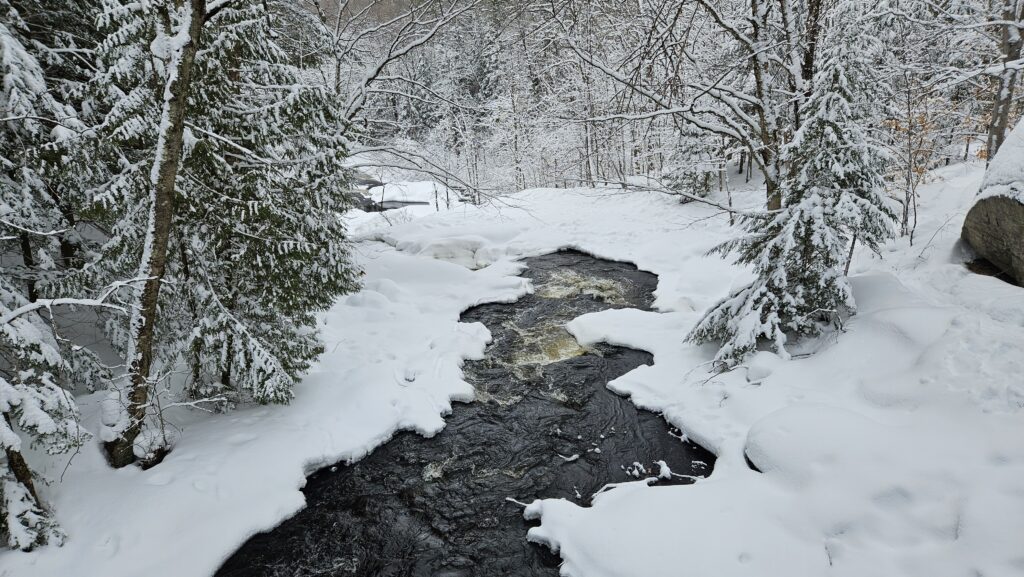
Our Bird Wing group had a fabulous time winter birding in Algonquin Provincial Park recently (Feb 21/26). Despite having a colder winter season than expected, the weather was very accommodating and the snow-dusted scenery was breathtaking.
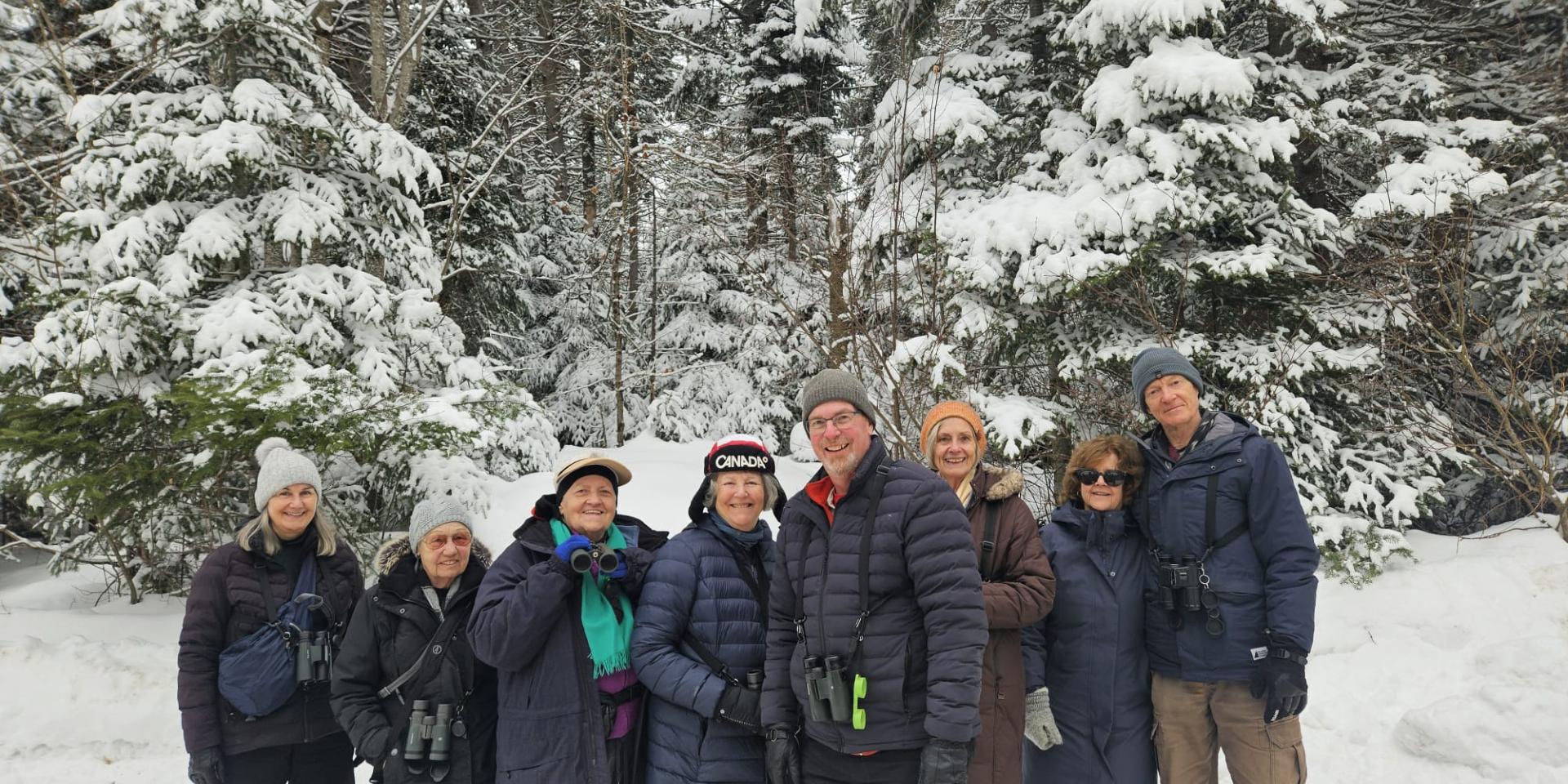
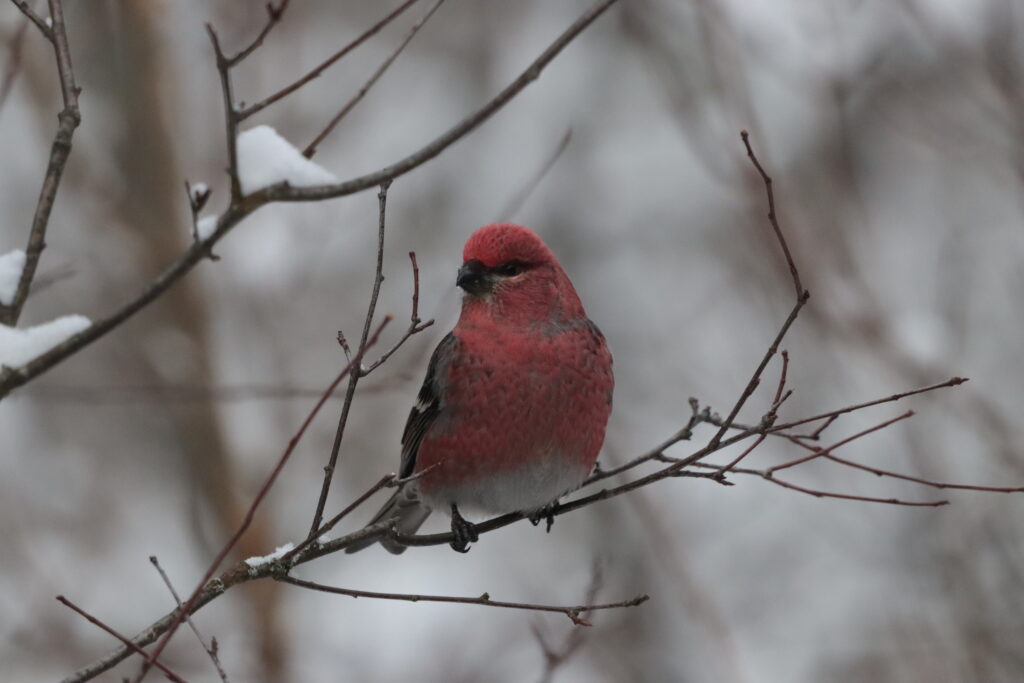
Eleven Nature Guelph members met at the Visitor’s Centre at 9 AM and enjoyed the many birds and squirrels visiting the feeders. There were numerous Blue Jays and Pine Grosbeaks as well as a few Black-capped Chickadees. The group was also treated to the arrival of a Ruffed Grouse that came through the pine trees to feed at the bottom of the feeders. Other species viewed include White-breasted Nuthatch, Downy Woodpecker and American Tree Sparrow.
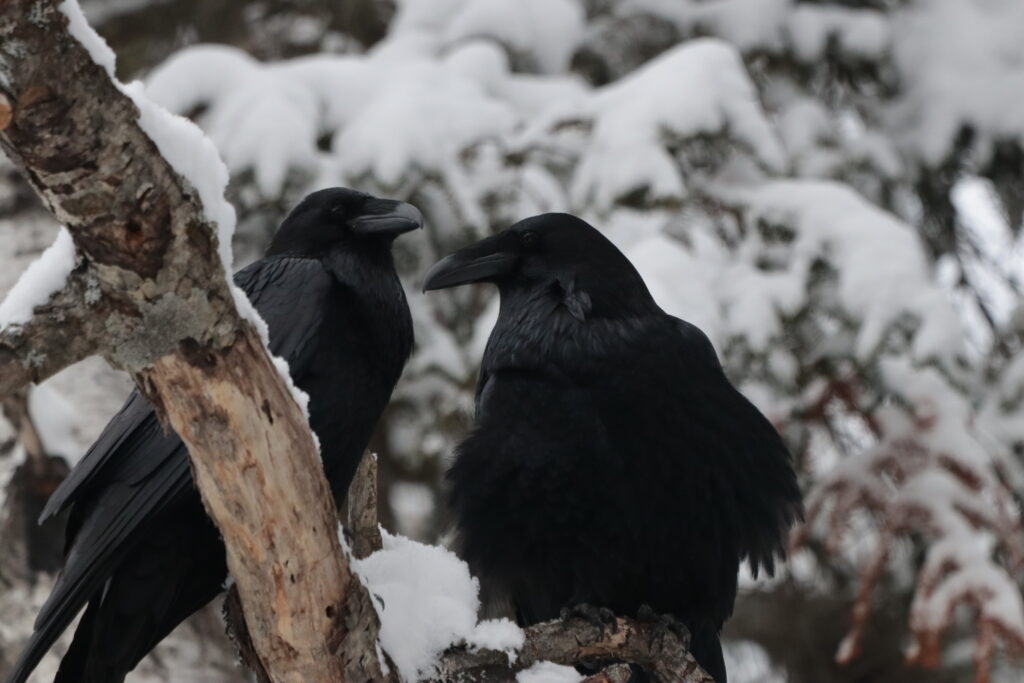
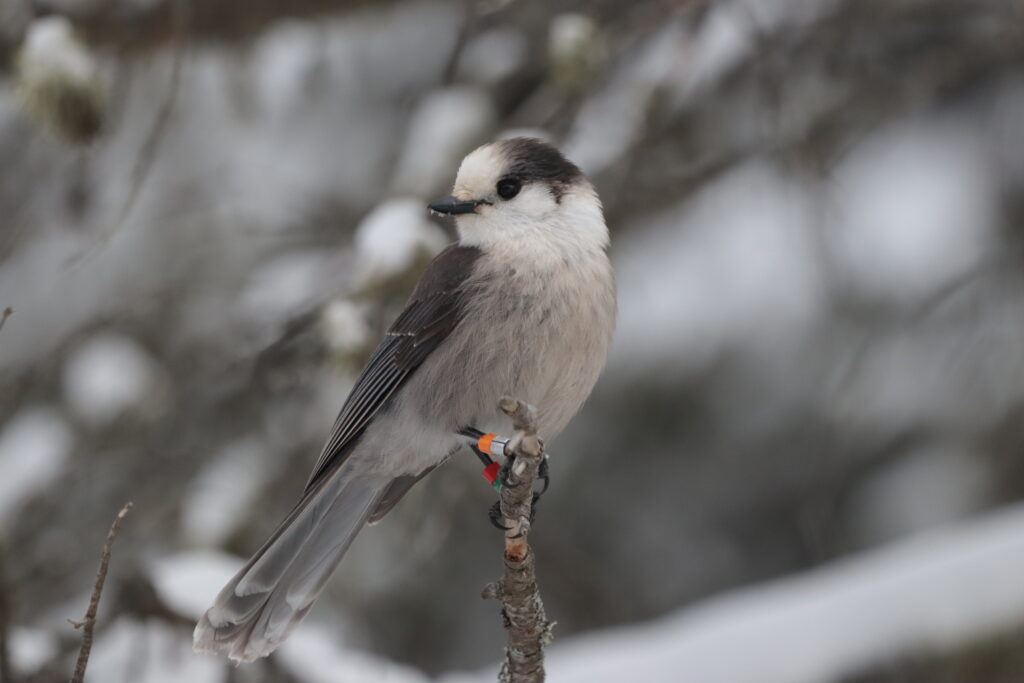
After enjoying the birds at the Visitor Centre, the crew headed over to the Spruce Bog Boardwalk Trail. This popular winter stop is known for a variety of birds including the Spruce Grouse, Canada Jay and Black-backed Woodpecker. This 1.5 km trail did not disappoint. After encountering two charismatic Common Ravens in the parking lot, the group was soon delighted with encounters with Black-capped Chickadees, White-breasted and Red-breasted Nuthatches. As we continued along the loop, we also spotted some Canada Jays in distant trees. These curious creatures also spotted us and came in for a closer look. The birds were banded under an ongoing monitoring program for the species on the Highway 60 corridor; these two in particular are the known pair for the Boardwalk territory, KOSLKOBR (male, 8 years old) and KOSLGOBR (female, 10+ years old). These “names” are unique codes that correspond to the coloured bands that the birds wear on their legs.
As we continued around the loop, we came across some interesting prints in the snow and spent some time trying to discern the species and the stories the tracks told. Later discussions with the Park Naturalists told us one particular spoor was likely a female Red Fox in heat marking her territory.
Returning to the parking lot we were delighted to find a Black-backed Woodpecker foraging in the trees at the edge of the lot. Great looks via binoculars, with a few attendees snapping some photos. .
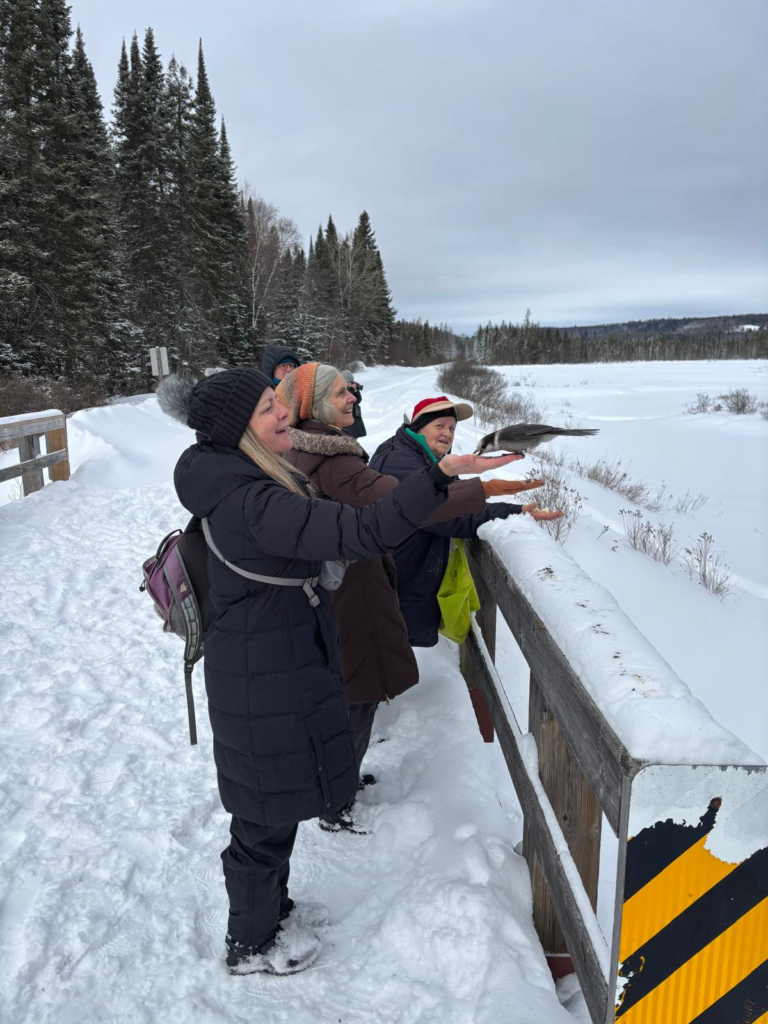
Next, we headed to Opeongo Road. This road is plowed to the backcountry access point, but the winter gate is closed north of the Cameron Lake Road intersection. The group walked approximately 500 metres beyond the closed gate to the bridge over the creek. This location is known for its intersection of territories for four pairs of Canada Jays and is a popular location to see the Jays up close. Once again, we were not disappointed. The group enjoyed engaging with four Canada Jays from three pairs: ROGLOOSR (male, 3+ years old) and WOSLWOTR (female, 6 years old), as well as BOBLBOSR (female, 3 years old), and KOSLKOLR (female, 9 years old).
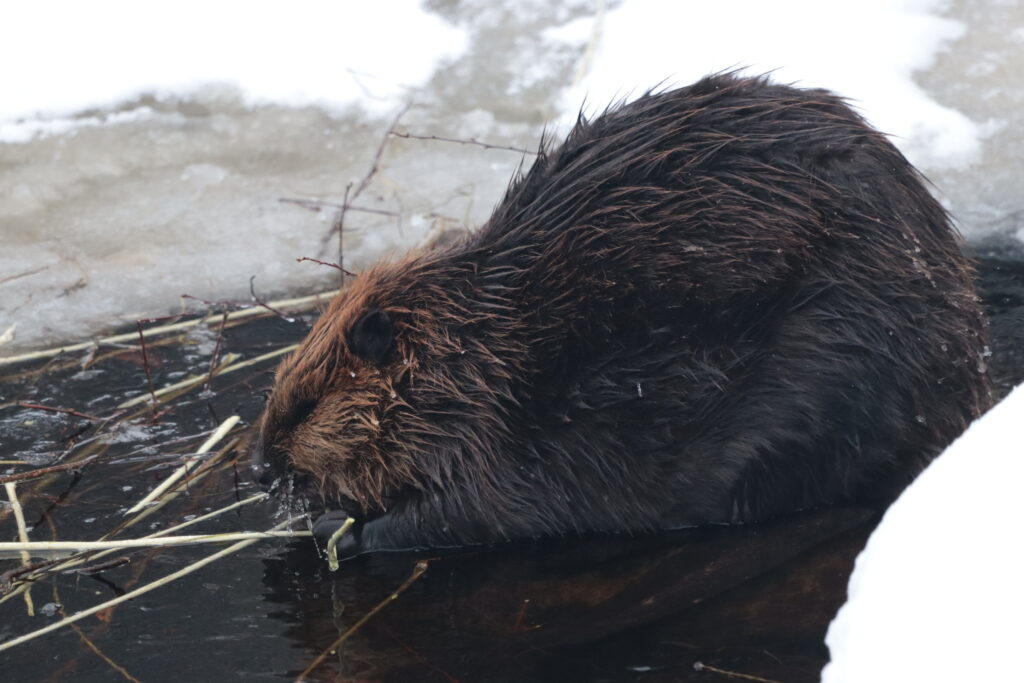
In addition to the Canada Jays, we encountered more Black-capped Chickadees, Red-breasted Nuthatches and a handful of Blue Jays. Also, a lone Redpoll was clearly heard flying over our heads briefly. A beaver was also posing for photographs close to the bridge.
The group then headed for the Visitor’s Centre once again to make use of the cafeteria for lunch and check out the bird feeders once again. Upon arrival we were treated to a lone Evening Grosbeak in the trees near the feeders. Lunch was enjoyed in the warmth of the Visitor’s Centre with everyone keeping an eye on the feeders.
After lunch it was decided to check out the birding at Mew Lake Campground and the nearby Old Airfield. Despite our wanderings we were unable to find any new species and had to be content with the Chickadees, Blue Jays and nuthatches in this part of the park.
We finished at Tea Lake Dam Picnic Area, where both a Common Goldeneye and a Hooded Merganser had been spotted earlier near the dam. Our search however was fruitless, and we encountered zero birds at this location.
In all we observed 14 species and had a fantastic day enjoying the winter scenery of a boreal forest. Everyone headed home happy.
At each stop, participants enjoyed scanning the water and shoreline, making notes and sharing sightings as they went.
Algonquin Banded Canada Jays
Since 2009, Dr. Ryan Norris (University of Guelph) and his graduate students have been collaborating with Dan Strickland, former Chief Park Naturalist for Algonquin Park, on Canada Jay research in Algonquin Park. Dan began marking Canada Jays in Algonquin and tracking their reproductive success in the mid 1970’s. The marking of Canada Jays is accomplished with specialized colour coded legbands (see below). These legbands are unique to each bird and translate into a name for each bird allowing for long-term and individual studies.
Band Code Guide:
O = Over (when 2nd & 6th letters) or Orange
L = left (when 4th letter) or Lime
R = Right (when 8th letter) or Red
P = Purple
K = pinK
S = Standard (number aluminum band)
W = White
Y = Yellow
G = dark Green
T = lighT blue
B = dark Blue
Example – KOSLKOBR = Pink Over Standard Left, Pink Over dark Blue Right